
Reviewed by Nir Tal — October 16, 2026
Key points
- Bleeding brakes removes air from the hydraulic line, which is what brings back a firm lever and full stopping power.
- The fluid type is not optional: Shimano runs mineral oil, SRAM runs DOT, and mixing them destroys seals.
- It is a doable home job with the right kit, but if your lever is still soft or you are heading for a canyon descent, let our Westwood bench handle it.
Spongy Lever Before a Canyon Descent? We Bleed Brakes Fast
Short answer: you bleed hydraulic brakes when the lever feels spongy or pulls to the bar, using the correct fluid for your brand, a bleed kit, and a careful, clean process. Get the fluid wrong, or let contamination near the pads, and you make it worse. I bleed brakes on the bench every week, so here is how to tell you need it, how to do it, and when bleeding brakes is a job to hand over.
Signs There Is Air in Your Brake Line
Air compresses, but brake fluid does not, so air in the line is what you feel as a soft brake. Watch for a lever that feels spongy or mushy instead of firm, a lever that pulls most of the way to the bar before biting, or brakes that fade on a long descent off Mandeville Canyon just when you need them most. Any of those means it is time for a bleed. On our Westside descents, vague brakes are not a maintenance nuisance; they are a safety issue, so do not ride it out.
Tools and Fluid You Need
You need a brand-specific bleed kit with the right syringes and fittings, the correct fluid, a set of hex keys, gloves, and rags, plus isopropyl alcohol to clean up spills immediately. The fluid is the part people get wrong, and it is not interchangeable. If you do not own a bleed kit, this is a reasonable job to let a shop do rather than buying a one-time tool. We have the kits for every system on our assembly and service bench.
No Bleed Kit? Drop It at Our Westwood Bench
Shimano Mineral Oil vs SRAM DOT: The Difference That Matters
This is the detail that wrecks brakes when ignored. The two major systems use different, incompatible fluids, and using the wrong one swells and destroys the seals inside your brake.
|
Shimano (and most mineral-oil brakes) |
SRAM (and other DOT brakes) |
|
|---|---|---|
|
Fluid |
Mineral oil |
DOT fluid |
|
Absorbs water |
No |
Yes, over time |
|
Skin and paint |
Gentler |
Corrosive, wipe spills fast |
|
Can you mix them |
Never |
Never |
The rule is simple: use only the exact fluid your brake brand specifies, and never mix types. If you are not certain which your brake uses, check the lever or the manufacturer before you open anything.
Bleeding Your Brakes, Step by Step
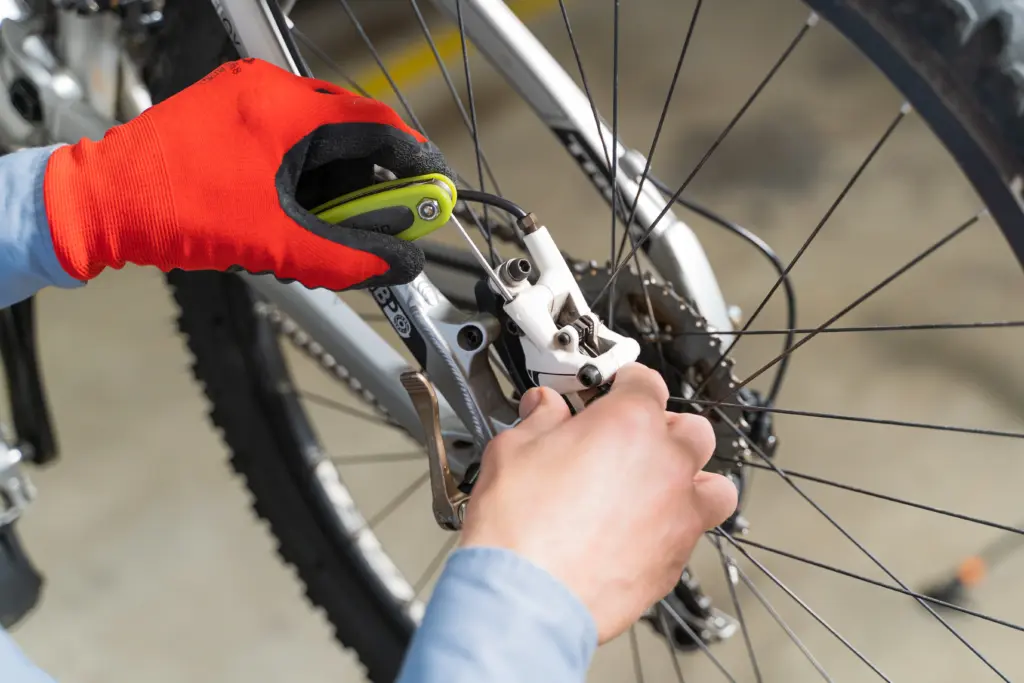
At a high level, the process is: shift the bike so the caliper and lever are positioned right, attach the bleed kit to the caliper and the lever, push fresh fluid through from the caliper up to the lever to carry the air out, work the lever and tap the hose to free trapped bubbles, then close up, check for a firm lever, and clean every trace of fluid off the rotor and pads. The exact port positions and order differ by brand, so follow the bleed procedure for your specific brake rather than a generic one. Take your time, keep it clean, and do not rush the final lever check. One more step people skip: bed the pads in again after any brake work, a few hard, controlled stops from speed on a quiet street, so the pads and rotor mate cleanly before you need them on a real descent. That is often why a freshly serviced brake still feels weak on the first ride.
Mistakes That Wreck Pads and Rotors
Most bleed disasters are not about the bleed itself, they are about contamination and carelessness.
Fluid on the pads or rotor
A single drop of brake fluid on a pad or rotor means squealing, lost power, and usually new pads. Keep fluid away from the braking surfaces, and clean the rotor with isopropyl alcohol when you are done.
Overfilling and the wrong fluid
Overfilling leaves the system unable to handle heat expansion on a long descent, and the wrong fluid swells the seals. Both are avoidable with the right kit and a steady hand.
When to Bring It to the Shop
Bring it in if the lever is still soft after a bleed, if you suspect a leak or a failing seal, if you do not own the correct kit, or if you simply want it done right before a big ride. We bleed most systems with same-week turnaround, and we check the whole brake while it is on the bench, pads, rotor, and hose, not just the fluid. For a part that stops you on a canyon descent, that is worth getting right.
Hot take: Bleeding brakes is one of the few home jobs where a small mistake costs more than the shop ever would. Get fluid on a rotor and you are buying pads and losing an afternoon. If you bleed your own, protect the braking surfaces like they are the only thing that matters, because on a descent, they are.
Let Our West LA Shop Handle the Bleed, Contact Us
Come by the Westwood bench
Bring your bike to Bike Improve at 10927 Santa Monica Blvd in Westwood, between Westwood and Veteran, and we will bleed the brakes, check the whole system, and send you out with a firm lever before your next ride.
Call Bike Improve at (310) 400-0363
Frequently Asked Questions
Straight answers to the questions riders ask us most at the shop in West LA.
How do I know my brakes need bleeding?
Bleeding brakes is due when the lever feels spongy, pulls to the bar, or your brakes fade on a long descent. Air in the line is what makes a hydraulic brake feel soft.
Can I bleed brakes with the wrong fluid?
No. Bleeding brakes with the wrong fluid swells and destroys the seals. Shimano and most mineral-oil brakes use mineral oil, SRAM and DOT brakes use DOT fluid, and you must never mix them.
Is the bleed hard to do at home?
The bleed is doable with a brand-specific kit and patience, but contamination ruins pads fast. If you do not own the kit or the lever stays soft, let a shop do it.
What happens if brake fluid touches the rotor?
Even a drop of fluid on the rotor or pads causes squealing and lost power, usually meaning new pads. Keep fluid off the braking surfaces when the bleed and clean the rotor with alcohol.
How much does it cost to have a shop bleed brakes?
At Bike Improve, the bleed is a standard service with same-week turnaround, and we inspect the whole brake while it is on the bench. Call (310) 400-0363 for current pricing.
Visit the shop
Bike Improve 10927 Santa Monica Blvd, Los Angeles, CA 90025 (between Westwood and Veteran) Phone: (310) 400-0363 Hours: Sunday to Friday, 11 AM to 5 PM. Closed Saturday.